
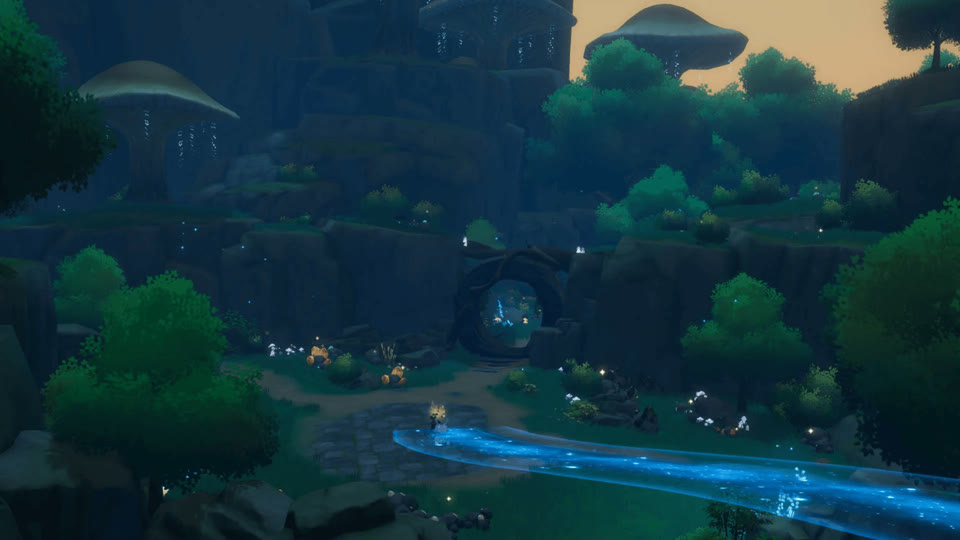

Enter with empty bag space, stamina and health food, multiple ammunition types, and a specific material target.
Moonlit Forest is the main adventure and mining region. Explorer progression combines repeatable resource routes, ranged combat, camps, treasure maps, and boss requirements.
Pack for a complete route
A failed expedition often starts with a full bag or too little food and ammunition.
- Empty enough slots for ore, ammo drops, maps, and chests.
- Carry both stamina and health-restoring food.
- Bring more than one ammunition type.
Use camps instead of returning home
Main forest zones include camps where you can craft, cook, and sleep.
- Restock ammunition at a camp when possible.
- Process only what frees meaningful bag space.
- Record which camp starts the shortest route to each ore.
Mine before challenging a boss
Collect non-hostile resources first if your weapon, ammunition, or food supply is still weak.
- Fully charge shots when damage efficiency matters.
- Activate resource-yield food immediately before the mining segment.
- Buy Workpedia perks that solve charge, ammo, healing, or yield problems.
Use treasure maps methodically
Place the active map on the hotbar and follow its directional arrow.
- Recheck remaining maps after digging.
- Several maps can point to the same location.
- Store rare components until advanced crafts and trials are checked.
Write a mission card before entering
Treat each forest visit as a job with one primary objective and one optional objective. Write the target item, the zone that supplies it, the tool or weapon needed, and the condition that ends the trip. This keeps an ore run from turning into an expensive sightseeing loop. A useful mission card might prioritize an upgrade material, permit treasure digging only along the route, and forbid boss engagement. Check the next recipe or Explorer task before departure so the target solves a real progression gate. If a new discovery changes the plan, finish the current objective first unless the opportunity is genuinely time-sensitive. The card should reduce decisions inside hostile territory, where every detour consumes food, ammunition, inventory space, and attention.
- Name one required output, its likely forest area, and the home recipe or quest it serves; vague goals such as gather everything encourage unnecessary combat and mixed inventory.
- Choose one permitted detour category, such as dirt mounds or a nearby secondary ore, so opportunistic collecting stays bounded without ignoring valuable discoveries on the path.
- Define an exit trigger before entry: complete the target batch, lose the healing reserve, exhaust a backup ammunition type, or fill the protected loot slots.
Use a two-pass route through dangerous ground
On the first pass, learn the safe edges of the route instead of harvesting every visible object. Note narrow approaches, enemy sight lines, climbable terrain, branch points, and the direction back toward the nearest camp. On the second pass, collect the target resources while following the already-tested path. This separates navigation mistakes from resource decisions and makes it easier to recognize when an enemy has moved into a previously safe lane. Keep the return leg simpler than the outward leg; a route that depends on perfect movement is unsuitable when health is low or the bag is full. When crossing into a deeper area, turn around briefly and memorize the reverse view, because landmarks often look different from the opposite direction.
- At every major fork, identify a retreat landmark that remains visible from the return direction, then connect those landmarks into a simple chain back to camp.
- Clear only enemies controlling the corridor you must reuse; optional fights beside dead-end resources can be postponed until the primary mission is already secured during this run.
- If the route becomes confusing, return to the last confirmed fork instead of pressing forward, spending more supplies, and creating a second navigation problem in hostile terrain.
Protect the value of first-time discoveries
A rare drop is not automatically expendable just because it is not part of today’s target. New ore, fragments, keys, and unusual components may connect to Islandpedia, advanced crafting, profession trials, or future exploration objectives. Give first-time items a protected section of the bag and resist converting or selling them in the field. After returning home, verify the discovery in Islandpedia, inspect known recipes and blueprints, and store a reference copy until its role is understood. This procedure matters most in deeper Moonlit Forest areas, where replacing an accidental sale may require another fully supplied expedition. Treat unidentified ore chunks similarly: keep them together for the Ore Analyzer rather than letting them disappear into general mineral storage without a record of the result.
- Reserve several adjacent bag slots for unfamiliar items, keeping them separate from common stone, food, and ammunition so a hurried sort does not destroy the evidence trail.
- Photograph or note the location and route when a new material appears; the item name alone will not help if its source is forgotten later.
- At home, check Islandpedia and active crafting requirements before processing the only copy, because discovery credit and usable inventory can solve separate completion problems later.
Debrief the route while the details are fresh
The most useful result of an expedition is not merely the loot; it is a route that becomes cheaper next time. Before unloading everything, record where supplies began to run short, which branch produced the target, and which encounters were unavoidable. Separate route failure from equipment failure. Getting lost calls for better landmarks, while repeated damage in a known corridor may justify gear, food, or practice. Then compare the haul with the recipe that prompted the trip. If the target batch is incomplete, plan the shortest corrective run rather than repeating the entire circuit. If it is complete, update the next mission card before processing begins. This creates continuity between exploration, crafting, and profession progression instead of treating every forest visit as an isolated event.
- Record the first depleted resource, not only the resource that reached zero; the earlier warning usually reveals whether route length, combat, or collection caused the problem.
- Mark one shortcut, hazard, and reliable landmark after each trip, then retire notes that no longer apply after unlocking new tools, camps, or access points.
- Count usable recipe outputs after sorting, since a bag full of mixed materials can feel successful while still failing to complete the intended upgrade batch.
Frequently asked questions
Can I sleep inside Moonlit Forest?
Yes. Main zones have camps that support sleeping, cooking, and crafting.
What is the safest Explorer upgrade order?
Choose the perk that fixes the current bottleneck: damage, charge speed, ammo recovery, healing, or treasure yield.