
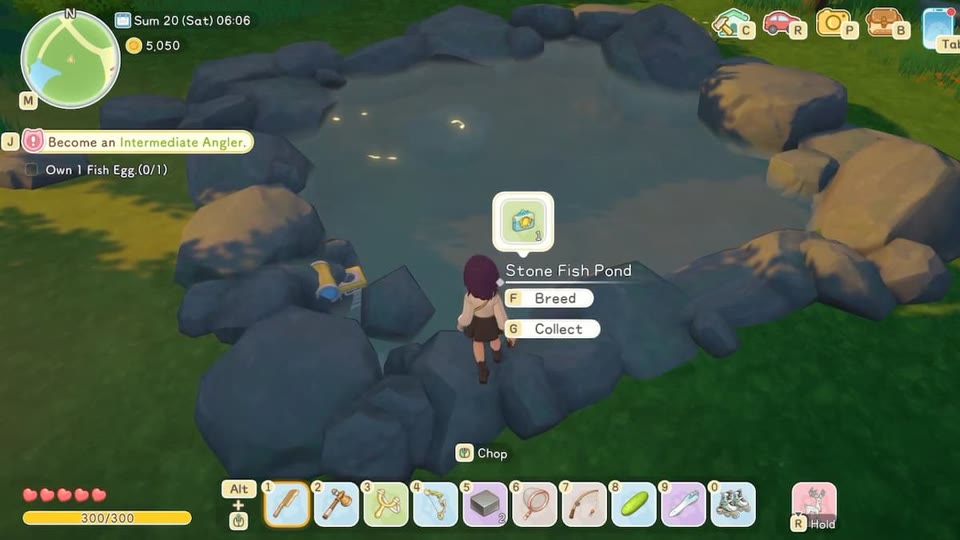

Choose pond fish by progression value, calculate total oxygen before stocking, keep the correct feed supplied, and leave capacity for eggs and replacements.
Fish ponds turn a successful catch into renewable stock. After the relevant Angler progression, expanded ponds can hold fish, consume feed at night, and produce eggs that hatch in an incubator cage.
Pick the pond from capacity and footprint
Pond types differ in grid size and oxygen capacity. A visually larger build is not always the best fit for the available plot.
- Measure the build grid before crafting.
- Reserve access around the pond and incubator.
- Choose oxygen capacity from the intended species list.
Calculate oxygen before adding fish
Each fish entry lists its oxygen use. The sum must fit the pond rather than relying on fish count alone.
- Write down oxygen per target species.
- Keep spare capacity for a new trial fish.
- Do not fill every slot before breeding begins.
Match feed and maintain the night cycle
Fish consume feed overnight and may produce eggs. Missing or wrong feed breaks the expected breeding rhythm.
- Craft feed before stocking the pond.
- Refill as part of the evening routine.
- Check species diet instead of assuming one food fits all.
Use breeding to protect rare catches
A pond is most valuable when it preserves a fish that is difficult to catch again or required by progression.
- Reserve the first scarce specimen for breeding when allowed.
- Move eggs to the incubator cage promptly.
- Keep one mature replacement before selling surplus.
Use ponds to bridge seasonal and weather gaps
The strongest breeding candidate is often a fish that will be difficult to catch again when the calendar changes. Before stocking, compare each species' catch conditions with upcoming recipes, trials, collection goals, and sale plans. Give priority to fish with narrow season, weather, time, or remote-habitat access when pond breeding is supported. Common all-season fish are easier to replace directly and may not justify scarce oxygen or feed. Keep the original catch protected until the breeding cycle is confirmed, and do not promise output on a specific night because egg production is chance-based. This strategy turns the pond into a continuity system: it preserves access to valuable stock while the outdoor fishing table moves into a less favorable season.
- Rank candidates by replacement difficulty using season, weather, time, travel, bait, and rod demands, then compare that score with their actual future uses, then update the seasonal stock plan.
- Stock before the qualifying season ends, but retain enough feed and free oxygen for the full trial period rather than rushing the final catch into a crowded pond.
- Keep one protected original until at least one offspring has hatched and become collectible, avoiding a breeding experiment that leaves no replacement specimen, then update the seasonal stock plan.
Maintain a breeding ledger for each pond
Pond results are difficult to interpret when species, feed, and collection dates are mixed. Assign every pond a ledger containing species, number stocked, total listed oxygen use, feed type, feed added, egg dates, incubator start dates, and collection outcomes. Update it during the same evening and morning service loops. If no egg appears, the record helps separate normal chance from missing feed, a profession or expansion prerequisite, incompatible stocking, or an oxygen mistake. Change only one factor at a time and observe several nights before concluding that the setup fails. The ledger also prevents accidental sale of breeding stock and provides evidence for deciding whether another pond would create useful capacity or merely duplicate an unreliable, under-supplied process.
- Label the pond physically and use the same name in the ledger, especially when several similar structures sit near one incubator or feed storage area.
- Record feed before sleep and outcomes after morning collection, preserving empty nights as data instead of noting only successful egg production, then update the breeding ledger.
- When troubleshooting, alter one variable—species mix, feed availability, stocking level, or prerequisite—then keep the remaining setup stable long enough to compare outcomes, then update the breeding ledger.
Forecast feed before expanding breeding capacity
A second pond adds value only when the feed chain can support it without starving bait, cooking, or ranch production. Estimate nightly feed consumption from the intended stocked fish, then work backward through the current Chopper recipe and its farm or processing inputs. Build a reserve for several nights before adding more fish. Include the player's service capacity: every pond must be checked, refilled, and its eggs moved through incubation. If the reserve repeatedly falls below the reorder point, reduce stocking or pause the least valuable pond instead of accepting silent missed cycles. Expansion should follow stable feed supply and a named breeding objective. This keeps ponds from becoming decorative structures whose oxygen is full but whose production stops whenever another profession claims the same ingredients.
- Calculate the next service interval's feed before stocking, using the recipe and consumption shown in the current version rather than an old community quantity table.
- Protect feed-chain ingredients from bait and profit cooking until the pond reserve is complete, then release only true surplus to the competing production line, then revise the feed forecast.
- Add another pond only after the existing one completes several reliably serviced cycles and the next pond has a distinct species or continuity purpose, then revise the feed forecast.
Plan oxygen as a flexible capacity budget
Oxygen is not merely a maximum to fill; it is a budget that should reflect uncertainty and upcoming goals. Start with the listed oxygen use of each fish and total the intended stock on paper. Reserve headroom for a newly caught trial fish, a replacement breeder, or a temporary experiment. When species have different oxygen costs, compare alternative combinations by purpose rather than by fish count. A pond holding fewer hard-to-replace breeders may be more valuable than one packed with common fish. Recalculate before every stocking change and after any update affecting pond data. If the game refuses a placement or behavior differs from the plan, trust the current interface, remove the last change, and retest rather than forcing the spreadsheet assumption.
- Write each stocked species and its current listed oxygen beside the pond, then recompute the total before adding, replacing, or moving any fish, then update the oxygen card.
- Keep deliberate headroom for one planned contingency and state its purpose, preventing spare capacity from being filled casually during an unrelated fishing return, then update the oxygen card.
- Compare pond combinations by protected uses—off-season supply, trial backup, rare breeder, or ingredient line—rather than maximizing the raw number of fish, then update the oxygen card.
Frequently asked questions
Why is my pond not producing eggs?
Check profession unlocks, pond expansion, fish compatibility, oxygen capacity, and whether the correct feed was available overnight.
Should I fill the pond to maximum oxygen?
Leave some capacity when you expect eggs, replacements, or a new trial species.