
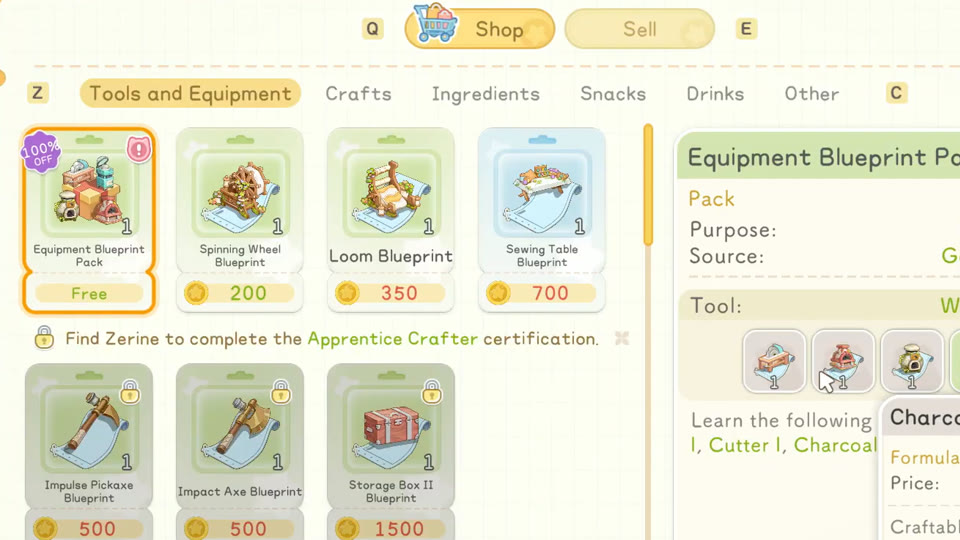

Keep enough Starsand for the next visible land or milestone cost. Spend only the surplus until regional access and core island infrastructure are secure.
Starsand is a progression currency separate from ordinary Coins. It comes from structured goals such as quests, requests, Island Life ranks, StarNote, camera challenges, and festivals.
Collect passive and one-time rewards first
Many Starsand sources are already tied to activities you need for progression. Claiming them is usually more efficient than inventing a separate grind.
- Clear completed Island Life and StarNote rewards.
- Check camera challenges and festival objectives before their window closes.
- Use Community Center requests that overlap with stocked materials.
Maintain a progression reserve
Land access and rank-related purchases can block several systems at once. A reserve prevents a cosmetic purchase from delaying a whole region.
- Open Island Life and identify the next Starsand gate.
- Add a safety margin for an unexpected blueprint or request.
- Store requested items rather than buying them back at a poor time.
Compare every purchase with its unlock value
A useful purchase either opens content, shortens a repeated route, or removes a resource bottleneck. Decorative value is real, but it does not need to come first.
- Buy access and infrastructure before optional shop collectibles.
- Prefer one strong Workpedia improvement over several weak conveniences.
- Delay expensive automation until you have enough volume to use it.
Recover from overspending
If the reserve is gone, stop optional purchases and stack several compatible objectives into one route.
- Accept requests that use renewable or overstocked goods.
- Combine photography, gathering, relationships, and deliveries by region.
- Recheck unclaimed app rewards before grinding more currency.
Build an income calendar from structured rewards
Starsand comes from discrete activities rather than ordinary shipping, so forecast it as a calendar of claimable rewards. List active quests, compatible Community Board requests, unclaimed StarNote and Island Life milestones, camera challenges, and upcoming festival objectives. Mark each source as repeatable, one-time, or time-limited. Complete overlaps first: a delivery that also advances a profession or relationship is stronger than a request requiring a dedicated rare-item hunt. This forecast prevents the false assumption that more farming automatically restores a depleted Starsand balance. It also shows when patience is better than grinding; a nearby milestone or festival may fund the next purchase without consuming materials reserved for a station or certification.
- Separate earned-but-unclaimed rewards from future possibilities, because phone notifications and completed milestone screens can hide immediately spendable Starsand that requires only a simple claim action.
- Rank sources by additional work, not headline reward: an objective already aligned with today's route should usually precede a larger reward that demands scarce stock.
- Review the calendar before festivals and patch updates, since limited objectives or changed triggers can alter which reward sources are realistically available in the current build.
Use a three-envelope Starsand budget
Divide the balance conceptually into access, capability, and discretionary envelopes. Access covers the next visible land or Island Life gate. Capability covers a Workpedia skill or blueprint tied to the active project. Discretionary spending includes collectibles, cosmetic choices, and conveniences without immediate progression value. Fund access first, then capability; spend from the third envelope only after the first two have named targets. The envelopes do not require fixed percentages, which would become inaccurate as costs and goals change. Instead, update each target whenever a new rank, plot, or skill appears. This method makes tradeoffs explicit while preserving room for personal goals once the island's next bottleneck is protected.
- Write the target beside each envelope, such as northern plot or Evergrowth tier, so reserved currency cannot quietly become an undefined pile available for impulse purchases.
- When a new unlock appears, compare it against the capability target before buying; replacing the target is allowed, but spending from both envelopes without review is not.
- Treat decorative spending as planned enjoyment rather than failure: establish a discretionary amount after progression reserves are safe, then use it without undermining the next gate.
Track the opportunity cost of every request
Community Board requests can supply Starsand, but their real cost is the best alternative use of the submitted items. Before accepting or completing one, label the goods as renewable surplus, seasonal stock, processed bottleneck, or protected progression material. Renewable surplus is an easy yes. Seasonal stock is acceptable only when a reserve remains. Processed bottlenecks and progression materials should be declined unless the reward directly clears a higher-priority gate. Include machine time and travel in the decision; a request made from cheap ingredients can still be expensive if it monopolizes a processor needed for upgrades. This rule turns request selection into budgeting rather than simply maximizing completed cards.
- Check the next profession trial, active recipes, and protected storage before submission; request interfaces should never be allowed to pull the final copy of a hard-to-replace item.
- Prefer requests completed from existing surplus or along an already planned route, since additional travel and processing are hidden costs that reduce the reward's practical value.
- Decline or ignore a poor request without guilt when it consumes a bottleneck; the goal is reliable progression income, not clearing every board slot regardless of cost.
Audit the Community Starsand Shop by role
When the Community Starsand Shop becomes available through Island Life progression, evaluate its stock by role: unlock, throughput, resilience, or collection. Unlock items open a system; throughput items increase useful output; resilience items protect storage or production; collection items mainly satisfy completion or style goals. Compare purchases within the same role rather than treating all blueprints equally. A freezer or specialist machine may be valuable only when spoilage, continuity, or an established chain justifies its supporting materials. Record both the Starsand price and the construction burden before buying a blueprint. Owning a recipe that cannot be built is not progress, and it can delay a skill that would be useful immediately.
- Inspect the blueprint's materials and placement needs before purchase, then confirm that its supporting production chain already exists or is the active project you intend to build.
- Prioritize items that solve a measured loss, such as repeated spoilage or an overloaded manual task, over equipment whose output currently has no planned consumer.
- Revisit collection purchases after major access and Workpedia goals are funded; late-game surplus has a different opportunity cost than Starsand held before critical land and skill gates.
Frequently asked questions
Are Starsand and Coins interchangeable?
No. Track them separately because they come from different activities and pay for different progression systems.
What is the safest first use of Starsand?
Prioritize the next land or Island Life gate shown in your current progression, then spend surplus.