
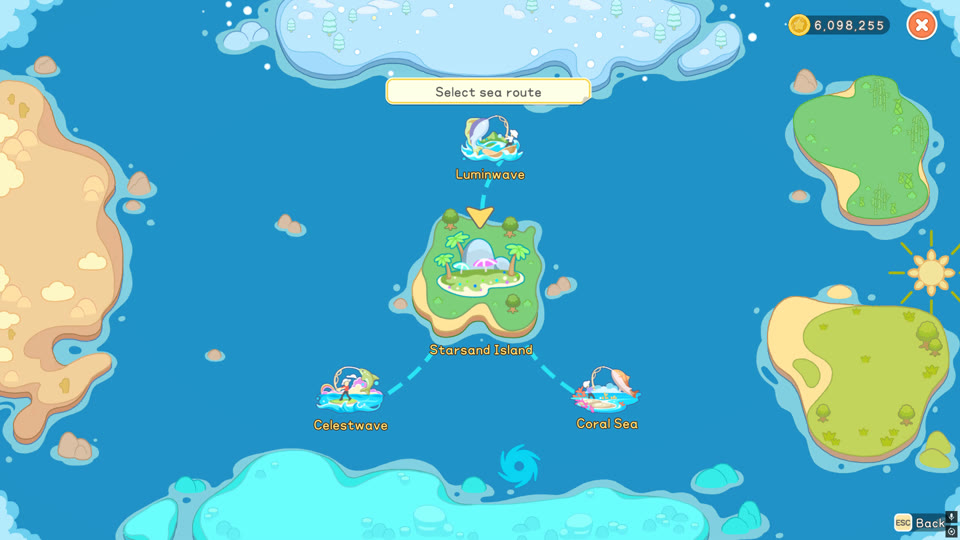

Process bait and empty the bag before sailing. Pick the offshore zone from the target fish conditions and stay until the planned window or inventory limit ends.
Offshore fishing adds travel cost and region-specific water. The Junior Angler route introduces boat access and rich fishing grounds, including a trip toward Luminwave.
Finish the land-side preparation
Craft the required chopper and separator inputs before reaching the dock so the boat trip is not spent fixing missing bait.
- Process fish into fillets only after protecting scarce specimens.
- Prepare flour and the correct bait type.
- Carry stamina food and spare fishing supplies.
Choose a zone from the target list
Celestwave, Coral Sea, Luminwave, and other offshore areas should not be treated as one generic ocean.
- Match the fish to its listed region and habitat.
- Check season, weather, and time before departure.
- Use the map to plan the shortest valid departure point.
Set a return rule
Travel is profitable when the trip has a clear end condition.
- Return when the target window closes.
- Stop when bag space threatens rare catches.
- Do not consume all bait after the required species is secured.
Process the catch by purpose
Separate Islandpedia, trial, breeding, recipe, and sale fish before using the Separator.
- Keep first-time species until their collection entry is confirmed.
- Reserve pond candidates and King fish.
- Process common surplus only when fillets support a planned recipe or bait chain.
Make a go-or-no-go decision before paying the fare
An offshore trip begins at the dock with a decision, not on the boat. Confirm that the named ground contains the target, the current season and weather qualify, the remaining clock covers travel plus fishing, and the shown fare leaves enough coins for planned purchases. Then check bait, rod, food, and open slots. If any mandatory condition fails, postpone and use the day for bait processing, pond care, or a shore target. Community sources disagree on some travel costs and fish rows, so read the current interface and Islandpedia rather than relying on a memorized number. A consistent departure gate prevents paying for scenic but unproductive trips and keeps narrow night windows from being lost to late preparation.
- Use a six-item dock check: named ground, season, weather, remaining time, displayed fare, and complete fishing kit, with no substitutions made after boarding, then update the dock checklist.
- Cancel the trip when the target entry is uncertain and verify it in Islandpedia first; offshore water should never be treated as one interchangeable ocean habitat.
- Keep a shore-based fallback list for failed departure days so prepared food and time still advance Angler goals without consuming the offshore bait reserve, then update the dock checklist.
Partition the bag for offshore catch triage
Offshore travel makes inventory mistakes more expensive because returning early sacrifices both time and fare. Before departure, divide the bag into supplies, protected catches, and ordinary output. Keep bait and food in fixed slots, reserve several empty slots for target species or rare finds, and allow common fish to fill only the remaining area. When capacity tightens, stop and classify catches before discarding, processing, or continuing. Protect first-time Islandpedia entries, King fish, trial requirements, and pond candidates immediately. If portable shared storage is available, transfer only clearly categorized items so the remote session does not create an unsorted Realm Box. This triage structure makes the return rule objective and reduces accidental loss during a valuable condition window.
- Leave a dedicated protected row empty at departure and move important catches into it immediately, preventing common output from consuming every remaining item-type slot, then update the catch manifest.
- Set a hard reserve of open slots that triggers review before the bag is full, because the next catch may require a new species slot.
- Use shared storage only for preassigned categories and keep uncertain first catches visible in the bag until their Islandpedia, trial, recipe, and pond uses are checked.
Stage night targets without wasting the daytime
Some offshore goals become available late, but the trip should not be an empty wait. Charter early enough to protect the departure window, then use daylight for species valid at the same ground, line-control practice, and careful bait conservation. Keep the target bait separate from general chumming and set an alarm or written switch time before the desired window. Shortly before it opens, clear inventory, move to the tested cast lane, verify weather again, and activate any food effect only when continuous target fishing can begin. Stop unrelated catches once the window starts. This staging plan converts travel overhead into useful Angler progress without allowing daytime activity to consume the stamina, slots, or bait reserved for the night objective.
- Prepare a daytime secondary list for the same named ground, prioritizing missing collection entries or useful ingredients that do not consume the protected target bait.
- Keep a visible switch time earlier than the target opening so inventory sorting, position changes, and final condition checks finish before the first valid minute.
- Reserve enough stamina and empty slots for the primary window, ending daytime fishing early when either resource approaches the protected threshold, then revise the night plan.
Evaluate each voyage as a complete route
A boat trip should be reviewed from home preparation through final catch allocation. Record the ground, qualifying conditions, departure and return times, fare displayed, bait used, useful catches, and the first resource that forced the trip to end. Then compare the outcome with the original objective. A voyage that lands a required fish is successful even if direct sale profit is modest; a full bag of duplicates may be poor despite high gross value if it consumed a rare window. Use the limiting resource to revise the next loadout: more empty slots, a smaller bait budget, stronger recovery, or earlier departure. Several route records will show which ground and window deserve repeat visits and which journeys were driven only by vague hope.
- Log fare and timing from the actual voyage because interface values and travel behavior can change between versions, making copied profitability assumptions unreliable, then update the voyage log.
- Value catches by the trip's stated goal—collection, trial, breeding, ingredients, or sale—before comparing raw coin totals with a different type of route, then update the voyage log.
- Change the next voyage according to the first limiting resource, not every inconvenience observed, so successive records reveal whether the correction truly worked, then update the voyage log.
Frequently asked questions
Do all ocean fish appear in every offshore zone?
No. Use the fish entry’s exact region and habitat instead of treating all sea water as equivalent.
What should I prepare before the Junior Angler boat route?
Boat access, the required machine blueprint, flour, fish fillet, Meat Bait, food, and empty bag space.