

Last safe planting day equals day 28 minus the full growth duration, rounded up. Add one safety day if watering, pests, or schedule interruptions are possible.
A profitable seed can still fail when planted too late. Crop growth is continuous, but the four main seasons are 28 days and normal seasonal restrictions still matter.
Calculate the deadline correctly
Convert hours into a fraction of a day, round the total growth time up, and subtract it from 28.
- Treat 4 days 6 hours as 5 calendar days for a safe plan.
- Add regrowth only when planning an additional harvest.
- Do not count the planting day twice.
Give regrowing crops enough runway
A regrowing crop is valuable only when the season contains enough time for its later harvests.
- Compare first-growth plus each regrowth interval.
- Plant long-cycle crops near the start of the season.
- Use late-season land for fast crops or preparation.
Protect the schedule from stopped growth
Unwatered crops and plot-specific pests interrupt progress. A mathematically exact deadline has no recovery margin.
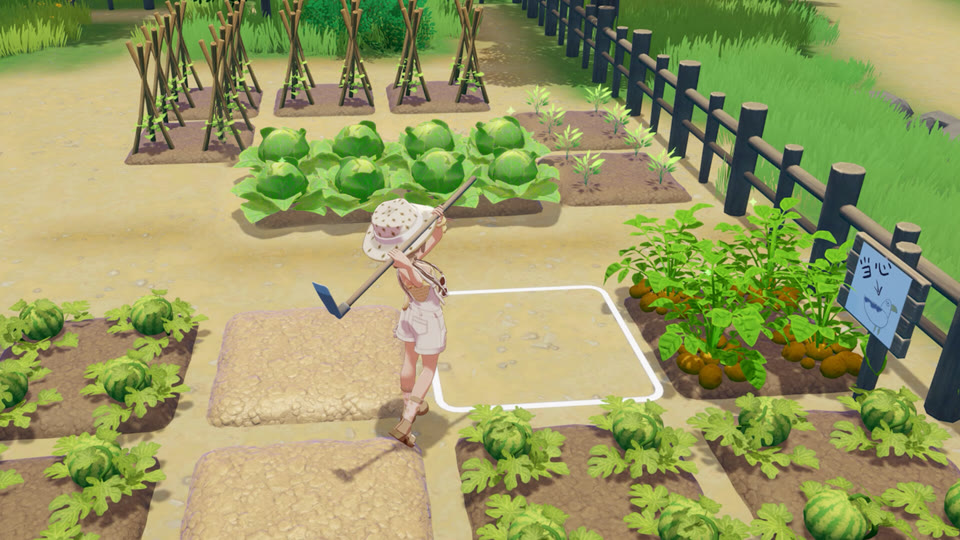
- Inspect weeds, trellis insects, and paddy snails daily.
- Keep helper animals near the plot they service.
- Use a one-day buffer for valuable or trial-critical crops.
Prepare the season transition
The last days are ideal for seed reserves, storage cleanup, fertilizer production, and field redesign.
- Keep seeds and one reserve of rare produce.
- Clear machines before the first major harvest of the new season.
- Check whether Expert Evergrowth changes your normal seasonal plan.
Run a rolling fourteen-day planting board
A full-season spreadsheet is useful, but daily decisions become clearer on a rolling board covering the next two weeks. For each crop block, record planting day, conservative maturity day, expected regrowth dates, plot type, and intended destination. Move the window forward each morning and flag any block whose next harvest approaches the season boundary. This makes labor peaks visible while there is still time to stagger a planting or clear machine capacity. Use conservative days rather than exact hours when a missed watering or pest could interrupt progress. The board should answer three practical questions instantly: what needs care today, what becomes harvestable soon, and which field should not be replanted.
- Color-code by plot type rather than crop price, because farmland, trellis, and paddy blocks require different construction, pest checks, and helper coverage during the same period.
- Add one recovery day to trial-critical plantings, then remove the buffer only when water, pest control, and harvest availability are demonstrably reliable in your current layout.
- Archive completed rows instead of deleting them; last season's actual maturity and interruption notes are much stronger planning evidence than a generic theoretical calendar alone.
Schedule seed procurement as its own task
A crop plan fails if seeds are not available when the field is ready. Before each planting wave, identify the source, unlock condition, shop access, and backup renewal method for every seed. Buy or produce seeds before clearing mature crops when possible, especially for regrowing or scarce varieties. Keep the field's intended packet count separate from the emergency reserve. Later systems can refresh stock or convert crops into seed, but their availability depends on profession progress and equipment; do not include them in an early calendar until they are active on the save. This procurement layer prevents empty tilled ground and protects rare produce from being sold before it can sustain the next cycle.
- Pair each planting row with a confirmed seed source and acquisition date, turning 'buy later' into a scheduled shop stop before the current crop is removed.
- Store emergency seed separately from packets assigned to the next field, so routine planting cannot silently consume the reserve intended to recover from shortages or mistakes.
- When using crop-to-seed processing, budget machine time and input produce in advance; a renewal method is not available if the processor or harvest is committed elsewhere.
Choose synchronization or staggering deliberately
Planting every tile at once simplifies care but concentrates harvest, storage, and processing on one day. Staggering smooths labor and machine input but creates more frequent field visits. Choose per crop chain. Synchronize giant-crop candidates, festival quantities, and blocks supported by wide-area sowing or chain harvesting. Stagger crops that feed continuously running machines, daily recipes, or requests. Do not mix schedules randomly inside one block, because mature and immature plants become harder to inspect for pests and safe replanting. Revisit the choice when Farmer skills, irrigation, or processing capacity changes. The right calendar is the one whose harvest rhythm matches the tools and downstream consumers you actually have.
- Synchronize only when empty staging storage and complete processing plans already exist, preventing a convenient planting day from creating an unmanageable harvest surge later on.
- Stagger in clearly labeled sub-blocks with one planting date each; scattered individual tiles increase inspection time and make regrowth or deadline calculations easy to confuse.
- After unlocking broader sowing or harvesting effects, test one synchronized block before redesigning the farm, confirming that the skill meaningfully reduces the previous labor peak.
Use a final-harvest decision tree
Near season end, evaluate every occupied block with the same decision tree. Can the crop mature again under conservative timing? If yes, does the next harvest justify continued water, pest risk, and labor? If no, is the plant protected by an active off-season system, or should the tile be cleared for transition work? Regrowing crops should not be kept merely because they remain alive; an unreachable harvest is sunk labor. Conversely, do not clear a valuable protected plant based on normal seasonal assumptions when Evergrowth or protected growing space changes the rule. Document the decision on the calendar, then redirect freed time to seed renewal, fertilizer, storage, and the next plot layout.
- Calculate from the next regrowth interval, not the original growth time, and include one interruption buffer when the final yield is needed for a trial or recipe.
- Stop watering a doomed ordinary block only after confirming that no active off-season effect protects it; seasonal and Evergrowth plans must always remain visibly separate.
- Use cleared late-season plots to test next season's paths and trellis positions, but delay irreversible permanent construction until seed sources and crop roles are confirmed.
Frequently asked questions
Can I plant on the exact last safe day?
Yes in perfect conditions, but a one-day buffer is safer because missed water or pests can stop progress.
How should I handle growth times with hours?
Round the total duration up to the next full day when calculating a safe planting deadline.