
Start with restrictive permissions, agree on resource rules, and never market the session as a permanently shared farm or shared save.
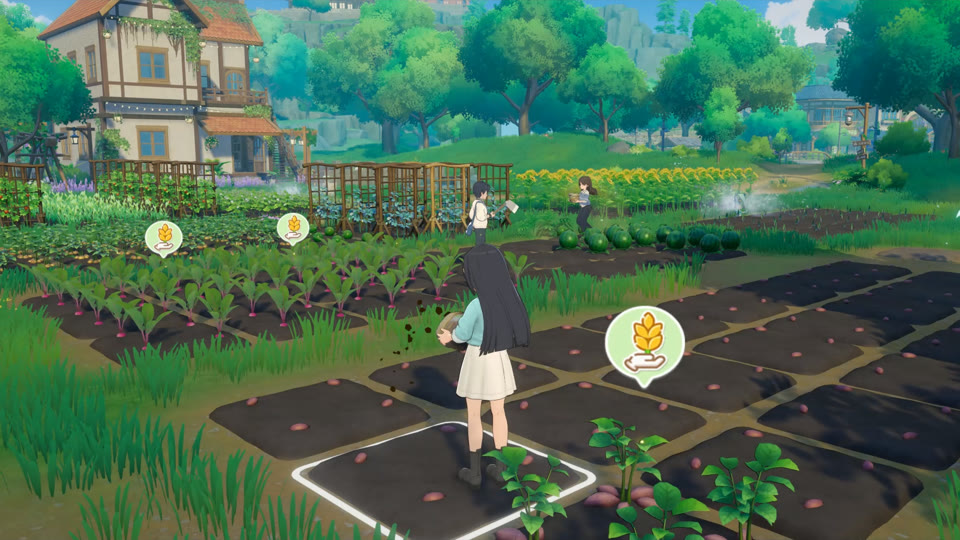
Version 1.0 supports up to four players on one host island. Guests keep their own island progression, and some quests must be finished back on the guest’s island.
Choose the right join mode
Hosts can allow anyone, require approval, or use an Island Code/password.
- Use Island Code/password for a private group.
- Nintendo Switch 2 invitations require the code/password mode.
- Cross-platform multiplayer is not currently supported.
Review every permission group
Hosts can control crops, livestock, fishing, crafting, and other island resources.
- Move scarce quest and festival items before opening access.
- Grant one resource category at a time.
- Change access immediately if a rule is misunderstood.
Agree on farm and machine rules
Decide who may harvest crops, care for animals, refill processors, and take completed outputs.
- Keep breeding stock and rare crops protected.
- Use separate storage for shared materials.
- Tell guests which machines are part of an active quest chain.
Understand separate progression
Island Life and personal island progression are not shared even when activities and profession tasks are completed together.
- Guests should return home regularly.
- Check whether a quest step requires the player’s own island.
- Use Multiplayer Coins in the Multiplayer Shop; do not confuse them with Coins or Starsand.
Publish a session brief before anyone joins
A host should define the purpose of the visit before sharing an Island Code or approving a request. State the session objective, expected duration, active work areas, protected resources, and how guests should ask before changing a plan. Use concrete language such as mine Moonlit Forest materials, complete commission quests, or build in the marked area. Then align the permission settings with that brief. If the session is for fishing, guests do not need unrelated ranch or crafting access. This keeps permissions understandable and makes later corrections feel procedural rather than personal. Because the host’s island is the shared location while Island Life progress remains separate, also remind guests which outcomes may need follow-up on their own islands after the session.
- Write one primary objective and a short protected-items list before opening the session, then share both alongside the join method rather than explaining rules after work begins.
- Enable only the permission categories required by that objective, expanding access during the session when a real task justifies it instead of granting everything preemptively.
- Tell guests which quest or profession results may require returning to their own island afterward, preventing the group from mistaking cooperative activity for shared Island Life progression.
Assign ownership at every production handoff
Co-op work becomes confusing when one player gathers, another processes, and nobody knows who may collect the result. For each shared chain, name the owner of inputs, machine operation, completed output, and final delivery. Place shared resources in a dedicated container and keep personal or quest-bound stock elsewhere. If a guest contributes scarce material, agree whether the product returns to that guest, stays with the host island, or serves a named group objective. The official co-op menu supports separate resource and activity permissions, but permissions cannot express every social rule. A written ownership chain closes that gap. Review it when players change roles or leave, since an abandoned machine queue can otherwise strand materials and produce disputes during the next session.
- For each active machine or construction chain, name clearly who supplies inputs, starts work, collects output, and performs delivery; do not assume permission implies ownership.
- Use visibly separate shared storage and return guest-specific contributions carefully before closing, especially when materials were intended for a personal profession quest or home-island objective.
- Pause new long processing jobs near session end unless the host accepts custody, records the contributor, and agrees how the finished output will be handled later.
Give guests a home-island follow-up checklist
Guests can farm, fish, adventure, care for animals, build, progress profession quests, and handle commission quests during multiplayer, yet some quest completion must occur on the guest’s own island and Island Life progress is not shared. Before disconnecting, each guest should review active objectives and identify what remains local to their save. List items carried home, profession steps advanced, commissions still requiring delivery, and any construction or resource state that exists only on the host island. This prevents a productive session from feeling broken when a quest does not finish remotely. The host should not promise that every action will transfer. Instead, use the official distinction between cooperative activities and separate island progression to plan a short solo cleanup after group play.
- Before leaving, each guest opens the quest and profession interfaces, noting any instruction that points back to their own island rather than assuming group completion synchronized it.
- Confirm required items are in the correct player's inventory and not left in host storage or a machine queue that will become inaccessible after disconnecting.
- Schedule home-island turn-ins and checks as the next step, then report genuine non-updates with version and session details instead of repeating co-op actions blindly again.
Close the session with a reconciliation walk
End cooperative play with a short host-led sweep before guests disconnect. Stop new destructive or resource-consuming work, empty agreed machine outputs, return borrowed tools and materials, and check protected crop, livestock, and build areas. Record unfinished construction and any item intentionally left for the host. Then reduce permissions or close access according to the group’s arrangement. This is especially useful while official notes continue to describe multiplayer stability as an area of ongoing refinement. A reconciliation walk cannot prevent every technical issue, but it creates a known final state and separates sync problems from ordinary misunderstandings. If something appears missing or incorrect, capture the area, player roles, action sequence, and current version before anyone tries multiple corrective actions that obscure the original state.
- Announce the closing phase before the final task today, preventing guests from starting another harvest, build, craft, or animal action while inventory reconciliation is underway.
- Return personal materials, collect assigned outputs, and photograph unfinished shared work accurately so the next session starts from an agreed state rather than conflicting memories.
- After guests leave, restore restrictive permissions and inspect critical areas once; document any anomalies before moving items or rebuilding, preserving useful evidence for later troubleshooting.
Frequently asked questions
Does multiplayer create a shared save?
No. The session uses the host’s island, while each player retains separate island progression.
Is cross-play supported?
Not as of September 1, 2026. Do not promise cross-platform multiplayer until an official update confirms it.